

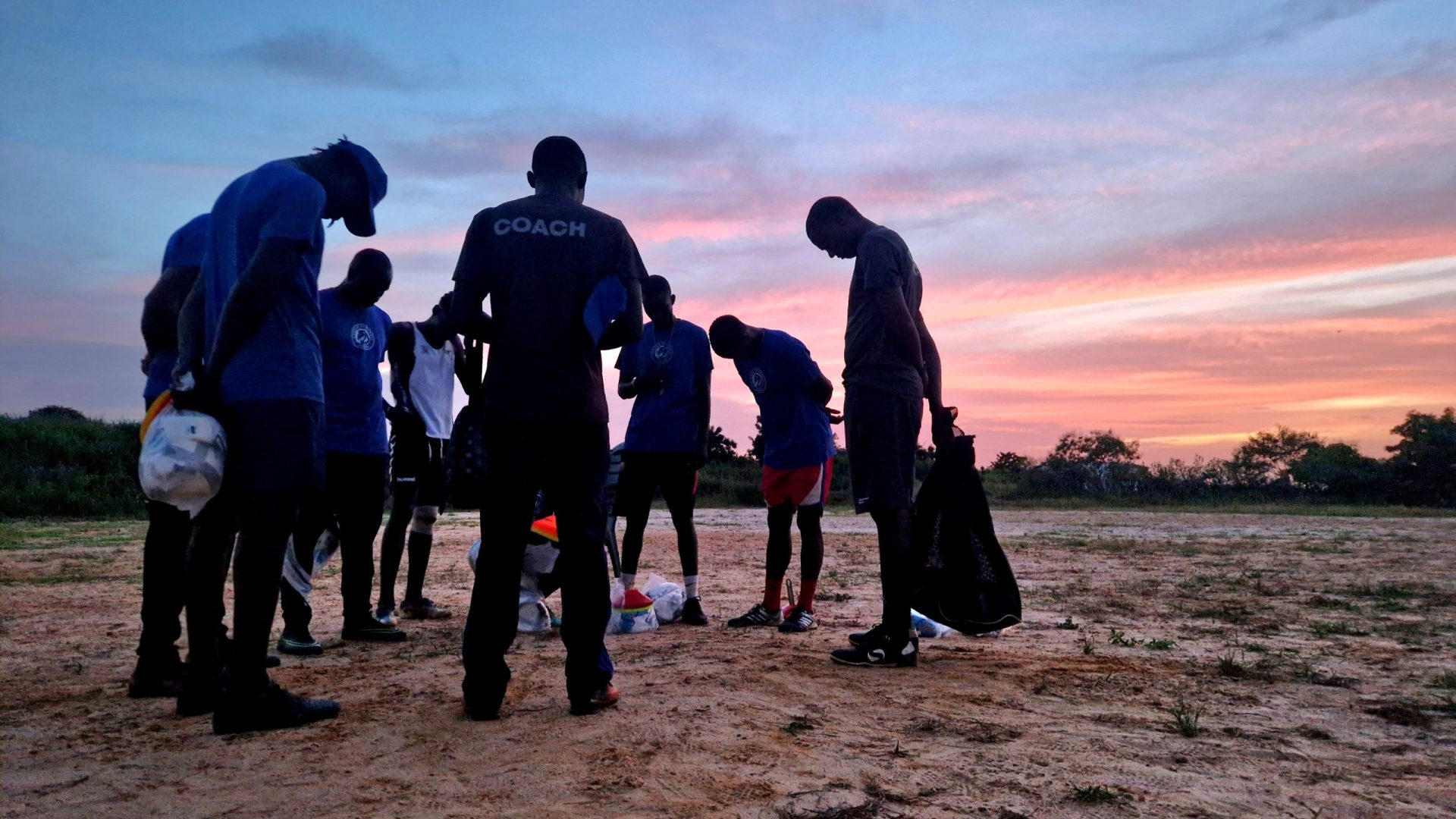
Love it or hate it, the World Cup is about to take over. A mission partner in a sensitive location shares how football is creating gospel opportunities.
In West Africa, football is BIG! Watching the Africa Cup of Nations final in our town square was a national event; there were well over 5000 frenzied spectators standing on the central plaza and many exuberant fans igniting fireworks at any opportunity (half time or a free kick to our country!).
Someone somewhere once said that we should be ‘in the world but not of it’. Jesus says in John 17: ‘My prayer is not that you take them out of the world, but that you protect them from the evil one.’ But being in the world or participating in the affairs of the world does not mean conforming to the world. As Paul encourages his readers: ‘Do not be conformed to this world, but be transformed by the renewal of your mind, that by testing you may discern what is the will of God, what is good and acceptable and perfect.’ (Romans 12:2)
So, what does being in the world and not of it look like? One way in which we can be in the world is by engaging in activities that the world loves and which are permitted in scripture, such as football. Across the world, people have found football to be a useful tool for engaging people with the gospel because it acts like a bridge. It gives you common ground. The shared love of football and membership of the same team gives a starting place for relating to and sharing the gospel with unbelieving teammates.
But there is a danger: A bridge is only useful if you cross it. We have to intentionally cross over the bridge with the gospel of our Lord so that people can hear, believe and be saved.
Over the last six months I had the privilege of partnering with Yakaar Football Academy in training some of their leaders and football coaches in walking over that bridge. Yakaar Football has been running for four years and has coaches all over the country running football teams in their areas. They are known to be Christian and still hundreds of kids from Muslim families come along for training.
A few months ago we looked at a gospel overview (Yoonu Ajana) using the names of the prophets as a springboard for speaking about God, his holiness, our sin and solutions that don’t work. After the session, one of the leaders said: ‘If I had known this before I did all my outreach in the capital I would have done it differently’. I asked for details and he explained how he used to preach that God had sent his son* Jesus to die on a cross* for our sins and that we must worship* him or face the eternal fire.
His message was completely true. The problem, as I’ve been working with these leaders to see, is that before you even get to explain the gospel, by mentioning certain things* you have closed the door (or broken the bridge) that might have been open to the gospel.
It’s like entering a hospital at visiting hours to see a sick friend but immediately being presented with a very large needle dripping with who-knows-what-type-of medicine about to be plunged into your arm. ‘STOP! STOP!’ We would shout, ‘Why are you trying to poke that needle into me?’ We rightly need to know that we are sick and with what before we accept the needle!
Similarly with the gospel. Muslims generally don’t see sin as rebellion against a holy God. Sins are mistakes that need to be balanced out with religious good works. The god of Islam is holy, but not so holy that we need our hearts washing before approaching him. Our hands, feet, face and ears are sufficient.
In this context we need to spend lots of time speaking of God’s holiness and our sinfulness. Until people are asking ‘How then can we be saved?’, the gospel is just a big needle easily rejected. Pray for these leaders to be bold contextual preachers of the gospel and pray for God’s word to return to him having accomplished its purpose (Isaiah 55:11).