

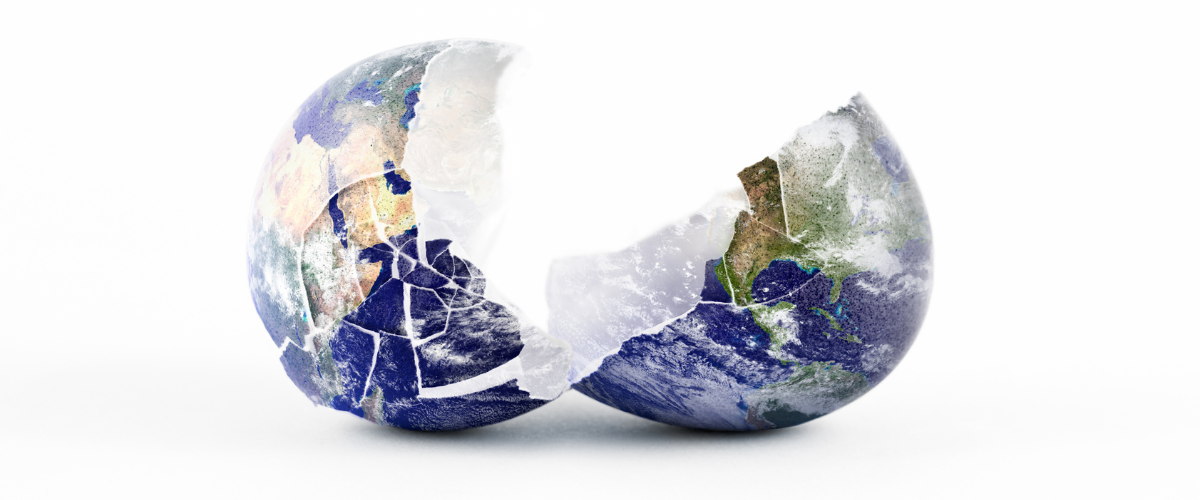
The rapid pace of change has taken even the most experienced social commentators by surprise.
The dismantling of the “rules-based order” (the idea that international relations follow agreed norms and rules) by many on the world stage means rapid change is afoot – and we’re not just looking at the current suspects. See what happened in smaller nations such as Myanmar in 2021 with the coup d’état, where the military seized power, disregarding democratic norms and international expectations.
As the Canadian Prime Minister, Mark Carney, recently noted, even before the current war in the Middle East exploded, there was “a rupture in the world order, the end of a pleasant fiction and the beginning of a harsh reality”.
The world today is not the world as was known post-Second World War, post-fall of the Berlin Wall, post-9/11 or even post-Covid. And one of the many consequences of this is deglobalisation.
Globalisation
Globalisation has been the air the church has breathed for many decades now.
The growing interdependence of nations, fuelled by shared technological advances (think the internet or the smartphone), has made the world feel smaller and closer.
For example, the proliferation of cheap direct flights, visa-less entry, and the wonders of a quick WhatsApp call home, have all made it much easier for church teams to visit mission partners abroad.
Or consider the sheer magnitude of global migration. In parts of the UK God has brought the nations to be our neighbours. I recently heard of a Chinese church in one town in the Midlands seeking to do evangelism among a majority Muslim area (families mainly from central and southern Asia) of another town in the Midlands!
Globalisation has presented the church in the UK with many opportunities, both on our doorstep but also overseas as we continue to be obedient to our identity as Jesus’ sent people (John 20:21).
Deglobalisation
Yet with a “rupture in the world order”, the air of globalisation is giving way to the smog of deglobalisation.
The connectedness we’ve shared is being broken. Hard borders between nations are fast going back up. It’s much harder now for UK citizens to obtain a visa to work in Europe – ask some of our Crosslinks mission partners who currently serve there.
For church leaders and pastoral students in the majority world, the once common route to study at seminaries or universities in the United States, the UK or Australia is now blocked to the overwhelming majority.
Mark Carney’s “harsh reality” is fast emerging: hard borders, the demise of friction-less trade, a global economy burdened by debt, war in both continental Europe and across the Middle East which will affect, we are told, the purses of us all (but of course it’s always the poorest and most disadvantaged who are affected the most).
How can the church respond?
As the church stares into the face of global instability and the acceleration of deglobalisation, we could be tempted to look away. But God’s mission of ‘reconciling the world to himself in Christ’ (2 Corinthians 5:19) still stands. His is the divine executive order.
The church’s mission as ‘Christ’s ambassadors, as though God were making his appeal through us’ (2 Corinthians 5:20) still stands. Our mandate has not changed.
So, whether the global trend is for globalisation or deglobalisation, the church has its mission to fulfil. The need only increases (compare the rates of global population growth versus church growth); gospel poverty abounds. The task is urgent – eternal destinies are at stake.
As we are confronted by our rapidly changing world, praise God for his unchanging gospel that is powerful to save – and don’t look away (as tempting as that will be).
This piece was originally published by Christian UK-news outlet Evangelicals Now, www.e-n.org.uk, and has been republished here with permission.